
Pick and Mix Speaking, Training, Workshops, Policies
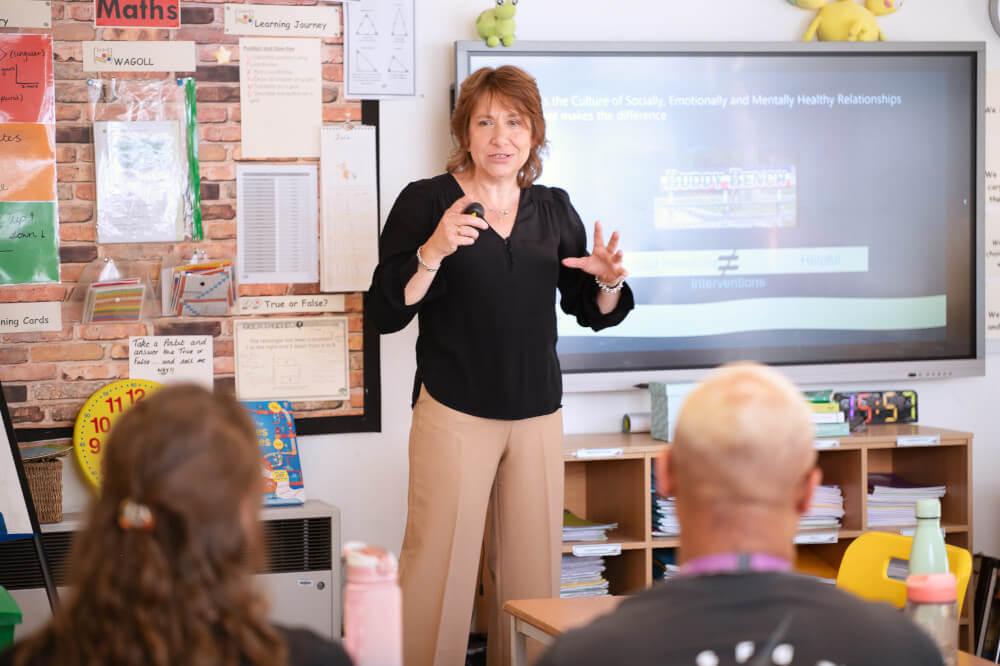
Speaking engagements
Speaking engagements on all topics (ideas throughout this website) and in varied settings (online or in person) are arranged via discussion with Heather.
Training
Training packages are designed in collaboration with you but examples include:
InSeT Day Overview of a Relational Approach
A comprehensive day of information sharing and activities, which become your reference manual as you move into applying the principles. Designed in collaboration with you.
Twilight Introductions to elements of a Relational Approach
Pick a focus and introduce your staff to digging deeper into how the complexities of relationships can be harnessed to improve social, emotional and mental health for all, reduced stress and enhance purposeful learning, for all children but especially for those who are struggling.

Specific Topics might include
- Moving Away from Rewards and Punishments – to maximise SEMH and purposeful learning.
- Scaling Boundaries in a Relational Approach
- Chaos vs Rigidity – Working Flexibly in a Relational Approach
- Mapping out the Journey towards SEMH Health and Purposeful Learning.
- Avoiding the Seduction of Simplicity for effective impact.
- Setting the Weather and Bringing the Umbrella – the role of emotional contagion in a Relational Approach
- Why Helpful Intentions are not always the same as Helpful Interventions
- Why Safeguarding and Behaviour Management should not be entirely separate

Workshops
Workshops for professionals might focus on:
- Understanding Child Development through ACEs and PCEs (Adverse and Positive Childhood Experiences)
- Working with Diversity from a Relational Perspective
- Empowering pupils through Peer Mediation, Play and Child Voice
- Parent Evenings – Examples: Help, My Child’s Behaviour is not OK, Thinking about Language and Encouraging my Child to Be Their Best, Getting to Self-Regulation through Understanding and Co-Regulation, How Do I Make a Difference? Working with Demand Avoidant Children
These are tried and tested ideas and but all work is attuned and a collaboration, so please ask and share your thoughts.
Policies
Love them or hate them policies have a role. At their best they can showcase your school culture, positively support staff members in their roles and contribute to mutually supportive relationships with parents and pupils.
Many however do not match practice and are a confusing accumulation of iterations of copy and paste.
I support the re-writing of Behaviour Policies to represent relational and developmentally healthy cultures with pride.
